Decarboxylation: Temperature, Time & Step-by-Step Guide
Decarboxylation is the single most important step in cannabis cooking. Without it, your edibles will not work. Get it right and you unlock the full potency of your cannabis. This guide covers everything: the science, the temperatures, the exact method and the most common mistakes.
What is Decarboxylation?
Raw cannabis contains THCA (tetrahydrocannabinolic acid) — an inactive compound with no psychoactive effect. When you apply heat, a chemical reaction removes a carboxyl group from THCA, converting it into THC, the active compound responsible for the effects of cannabis.
This process is called decarboxylation (or “decarb”). Without it, eating raw cannabis produces very little effect because THCA passes through the digestive system largely unchanged. The same applies to CBDA converting to CBD for medicinal preparations.
The Right Temperatures for Decarboxylation
Temperature is critical. Too low and the conversion is incomplete; too high and you destroy the cannabinoids and terpenes you want to preserve.
| Temperature (F) | Temperature (C) | Duration | Notes |
|---|---|---|---|
| 220–230°F | 105–110°C | 40–45 min | Best for preserving terpenes and flavour |
| 240–250°F | 115–120°C | 25–30 min | Standard method, reliable results |
| 260°F | 125°C | 20 min | Faster but higher risk of over-decarbing |
| 300°F+ | 150°C+ | — | Avoid — degrades THC and CBD |
Recommended for most home cooks: 240°F / 115°C for 30 minutes.
Oven Decarboxylation: Step-by-Step
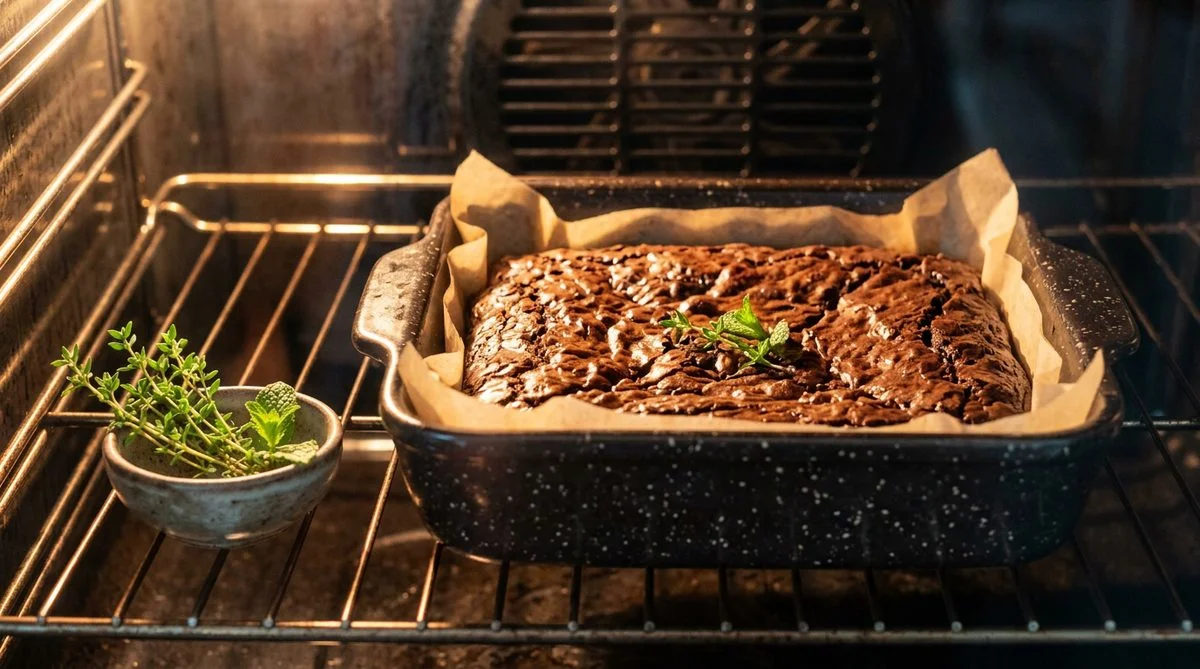
You need: cannabis (ground or broken up), an oven-safe baking dish or sheet, parchment paper and an oven thermometer (most ovens run 10–25°F off).
- Preheat your oven to 240°F (115°C). Use an oven thermometer — accuracy matters.
- Break up the cannabis into a coarse grind. Spread it evenly on a parchment-lined baking sheet or in a covered oven-safe dish.
- Place in oven on the middle rack. Bake for 30 minutes, checking once at the 15-minute mark.
- Check the colour. Done cannabis turns from bright green to light, toasted brown or golden. The aroma becomes dry and nutty.
- Remove and cool. Let it cool completely before handling. It becomes more crumbly once decarbed.
- Use immediately or store in an airtight jar away from light. Decarbed cannabis stays potent for several weeks.
Common Mistakes to Avoid
- Too high temperature: Exceeding 300°F burns off cannabinoids and destroys terpenes. Your edibles will be weaker and taste worse.
- Uneven spreading: Cannabis piled up in a dish decarbs unevenly. Spread it in a thin, even layer.
- Skipping the oven thermometer: Oven temperature markings are often inaccurate by 20°F or more.
- Using uncured cannabis: Freshly harvested wet cannabis has high moisture. Dry it first or add 10–15 minutes to the decarb time.
- Over-grinding: Fine powder burns faster and unevenly. A coarse grind is ideal.
After Decarboxylation: What Next?
Once your cannabis is decarbed, infuse it into a fat-based carrier:
- Cannabutter — the most versatile option for baking
- Cannabis oil — great for cooking, salad dressings and capsules
Frequently Asked Questions
What temperature do you decarboxylate cannabis?
The most common temperatures are 230°F (110°C) for 30–45 minutes for a slower, flavour-preserving decarb, or 250°F (120°C) for 20–30 minutes for a faster method. Avoid exceeding 300°F.
How do I know when decarboxylation is complete?
The cannabis changes color from bright green to light brown or golden, becomes drier and more crumbly, and produces a strong toasty aroma.
Can you decarboxylate without an oven?
Yes. Use a sous-vide machine (240°F for 90 minutes in a sealed bag), a slow cooker, or a Mason jar in boiling water. The oven method remains the most widely used.
Does decarboxylation destroy CBD?
No. Proper decarboxylation converts CBDA into CBD and THCA into THC. Temperatures above 300°F begin to degrade both cannabinoids.
Legal notice: ZenCannaKitchen is an informational platform. Cannabis laws vary by jurisdiction. Only use this information where cannabis is legal. Always start with low doses.